The Traditional Methods of the Great
European Artists Described and Analyzed Painting Explained
by Thomas Gullick
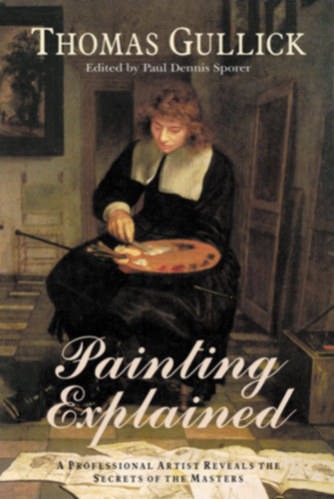 A common lament among artists is that there are no books available that give specific, practical information about the procedures used by those creative geniuses collectively known as the Old Masters. The reason for this dearth is that such a work's author would have to possess extraordinarily wide-ranging expert knowledge and skills. Thomas Gullick's credentials indicate a great capability in taking up this challenge. He was a professional artist and scholar living in the mid-19th century, and so was in an exemplary position to discuss the intricacies of traditional techniques, and to compare modern systems to the styles and methods of previous eras. His work, Painting Explained, is an exceptionally insightful combination of art history, aesthetic theory and erudite analysis. Of particular value to the working artist are the detailed sections dealing with technical issues of pre-modern forms of painting, many of which are poorly understood today, but that could, if used, greatly facilitate and expand the range of visual expression. The reader will learn about various physical processes such as encaustic, mosaic, tempera, fresco, oil and miniature painting. There is also a wealth of knowledge pertaining to implements, vehicles, varnishes, grounds, colors, subjectiles (i.e. supports), chemical formulations, the arrangement of the work-room and studio, and much more. Despite the sophisticated nature of the material, the author does not neglect the human dimension, for Gullick cites pertinent facts, as well as witty anecdotes, from the life stories of many well-known and not so well-known artists. Painting Explained is an indispensable, very informative book for artists and art lovers. A common lament among artists is that there are no books available that give specific, practical information about the procedures used by those creative geniuses collectively known as the Old Masters. The reason for this dearth is that such a work's author would have to possess extraordinarily wide-ranging expert knowledge and skills. Thomas Gullick's credentials indicate a great capability in taking up this challenge. He was a professional artist and scholar living in the mid-19th century, and so was in an exemplary position to discuss the intricacies of traditional techniques, and to compare modern systems to the styles and methods of previous eras. His work, Painting Explained, is an exceptionally insightful combination of art history, aesthetic theory and erudite analysis. Of particular value to the working artist are the detailed sections dealing with technical issues of pre-modern forms of painting, many of which are poorly understood today, but that could, if used, greatly facilitate and expand the range of visual expression. The reader will learn about various physical processes such as encaustic, mosaic, tempera, fresco, oil and miniature painting. There is also a wealth of knowledge pertaining to implements, vehicles, varnishes, grounds, colors, subjectiles (i.e. supports), chemical formulations, the arrangement of the work-room and studio, and much more. Despite the sophisticated nature of the material, the author does not neglect the human dimension, for Gullick cites pertinent facts, as well as witty anecdotes, from the life stories of many well-known and not so well-known artists. Painting Explained is an indispensable, very informative book for artists and art lovers.
To purchase this book from B&N, please click here.
(This bookseller has fast and free delivery, discounts and return privileges)
Additional Resources:
Download the Brochure
Read an excerpt from Painting Explained
Other related titles: Beauty and Art, by Aldam Heaton; The Science of Beauty, by John Bascom; Trails of a Paintbrush, by Nicholas Brewer |